How to Stay Safe🛡️ Online and Protect Your Data...
Stay safe online with smart habits—protect your passwords, avoid scams, use secure connections, and stay alert. Safeguard your privacy and keep your personal data in trusted hands. #CyberSafety #OnlineSecurity #DataProtection

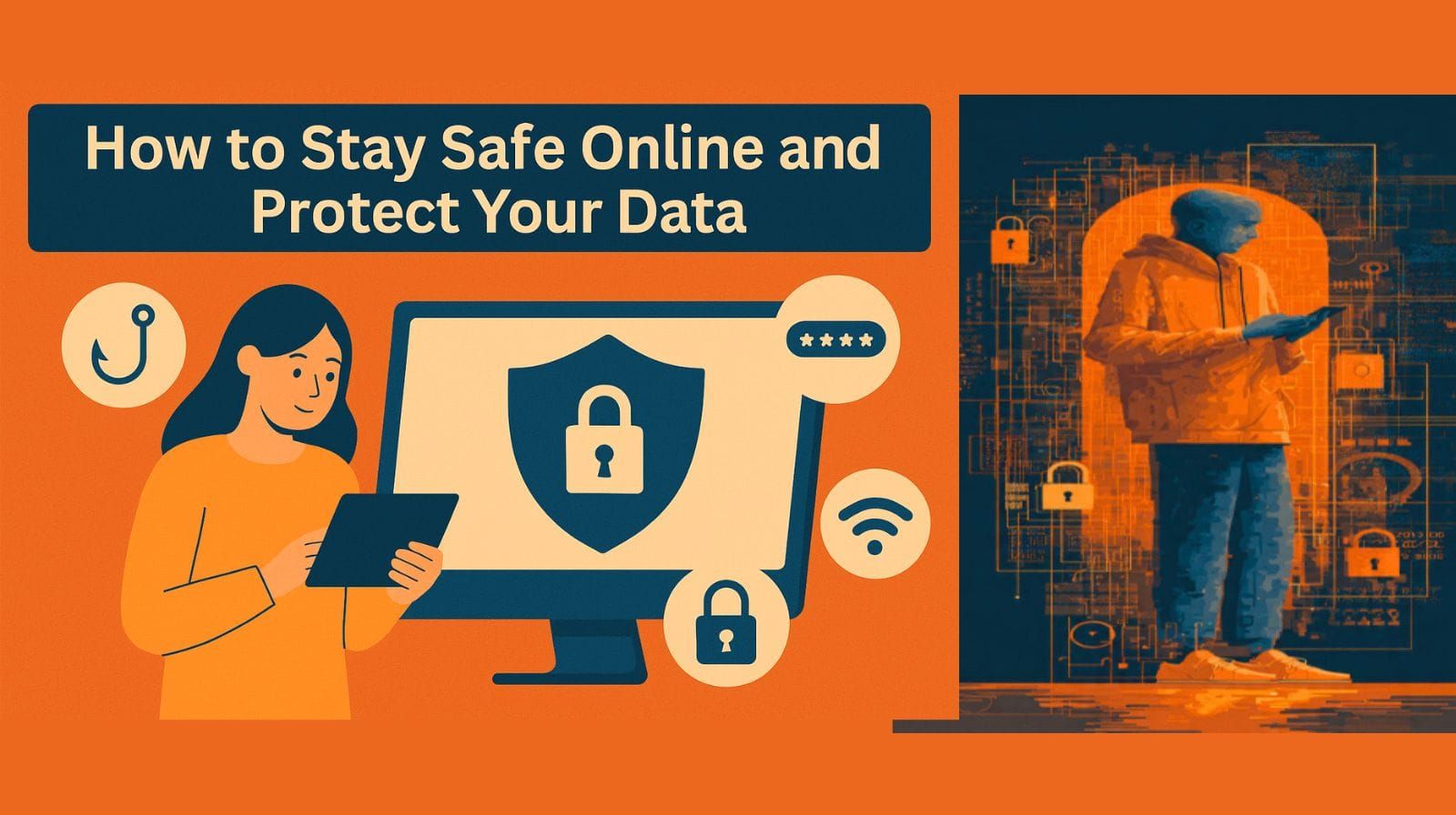
In today’s digital world, our lives are almost completely online — from banking to chatting, from shopping to studying. But as convenient as it sounds, it also means our personal information is floating around the internet — often without us realizing how vulnerable it is.
Cybercriminals are getting smarter every day, and one careless click can cost you your privacy, your money, and your peace of mind. So how do you stay safe online and protect your data in 2025?
Let’s break it down step by step.
🌐 1. Be Careful What You Share
We live in an era of oversharing — photos, travel plans, birthdays, even your pet’s name (which might just be your password!).
🔹 Avoid posting sensitive details like your address, phone number, or financial info online.
🔹 Don’t share real-time location updates publicly. Wait until you’re back home before posting that vacation photo.
🔹 Remember: once something is online, it’s almost impossible to completely erase.
Pro Tip: Review your social media privacy settings regularly. You’ll be surprised how much of your profile is visible to strangers by default.
🔑 2. Use Strong, Unique Passwords
If your password is “123456”, “password”, or your pet’s name, it’s time for an upgrade.
A strong password should be:
- At least 12 characters long
- A mix of letters (upper and lowercase), numbers, and special symbols
- Unique for every account
Why it matters:
If one of your accounts gets hacked, having the same password everywhere gives hackers access to everything else — from your Instagram to your bank account.
💡 Use a password manager. It can generate and store complex passwords securely, so you don’t have to remember them all.
🧠 3. Think Before You Click
Phishing scams are everywhere — fake emails, messages, or ads that look too good to be true. They often trick you into clicking a link or entering your details.
To stay safe:
- Don’t click on suspicious links or attachments.
- Double-check the sender’s email address.
- Hover over links to see where they actually lead.
- If an offer seems unreal (“You’ve won ₹1 crore!”), it probably is.
📱 4. Keep Your Devices Updated
We all get lazy about updates — but they’re crucial.
Updates fix security loopholes that hackers love to exploit. Whether it’s your laptop, smartphone, or apps, always:
- Enable automatic updates if possible.
- Delete apps you no longer use.
- Avoid downloading apps from untrusted sources.
It’s a simple habit that can protect you from major cyber threats.
☁️ 5. Use Secure Networks
Public Wi-Fi (like in cafés or airports) is convenient — but it’s also one of the easiest places for hackers to snoop on your data.
Here’s what you can do:
- Avoid logging into banking or shopping accounts on public Wi-Fi.
- Use a VPN (Virtual Private Network) to encrypt your connection.
- Turn off file sharing and AirDrop when not needed.
🔒 6. Enable Two-Factor Authentication (2FA)
Even if someone gets your password, 2FA adds a second layer of security — usually a one-time code sent to your phone or email.
It takes a few extra seconds but can save you from a lot of headaches. Enable it wherever possible — email, social media, banking, cloud storage, etc.
💬 7. Be Wary of What You Download
Malware can hide in free software, attachments, or pirated files.
Stick to official websites or app stores, and don’t download files from unknown sources — no matter how tempting they look.
📊 8. Back Up Your Data
Data loss isn’t just about hacking — devices crash, get stolen, or corrupted.
Keep regular backups of your important files, either on a secure cloud service or an external hard drive.
This ensures you don’t lose precious documents, memories, or work even if your system gets compromised.
💡 Final Thoughts
Staying safe online isn’t about being paranoid — it’s about being smart.
A few mindful habits can make all the difference:
- Be skeptical of what you see online.
- Stay informed about new scams.
- Treat your personal data like your house keys — never share them carelessly.
In the end, online safety comes down to awareness and action.
The more cautious and informed you are, the harder it becomes for anyone to misuse your data.
So, stay alert, stay private, and stay safe online. 🖥️✨
⚠️ Disclaimer
This blog is for educational and awareness purposes only. It does not constitute professional cybersecurity advice. Readers are encouraged to use trusted tools and consult certified experts for personalized protection or data recovery. The author assumes no liability for any loss or damage arising from following the suggestions in this article.