♻️ Is Plastic-Free Always Better? The Controversial Truth About Eco-Swaps.
Plastic-free doesn’t always mean eco-friendly. Many alternatives use more water, energy, and fuel. True sustainability is about reducing waste, reusing products, and understanding real environmental impact — not just avoiding plastic. #Sustainability #PlasticFree #EcoLiving #GreenTruth #Bitveen

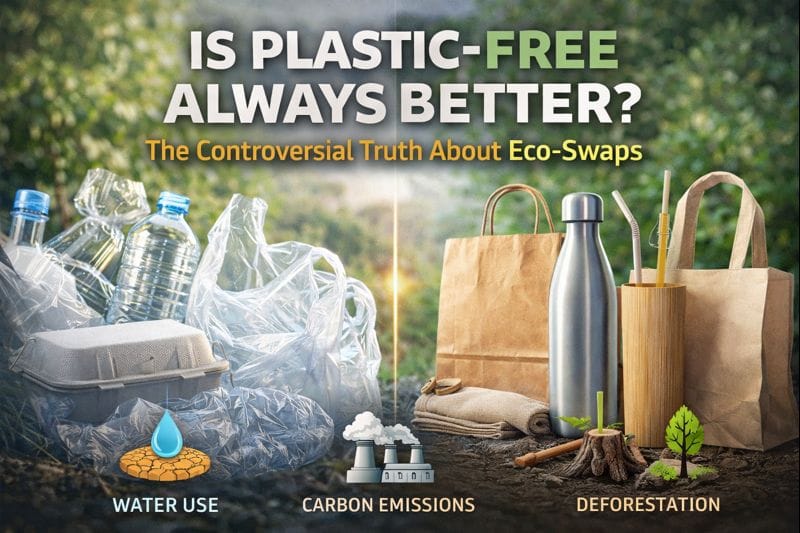
“Plastic-free” sounds like the perfect solution.
From steel straws to paper packaging, eco-swaps are everywhere — and often marketed as automatically better for the planet.
But here’s the uncomfortable truth:
plastic-free is not always more eco-friendly.
Let’s move past slogans and look at the reality — without guilt, without greenwashing.
🌍 Why Plastic Became the Villain
Plastic pollution is real. Oceans, wildlife, microplastics in food — these are serious issues.
But plastic also exists because it is:
- Lightweight
- Durable
- Cheap to transport
- Extremely efficient in certain use cases
The problem isn’t plastic itself.
The problem is how much we use, how we dispose of it, and how little we recycle.
🔄 The Hidden Cost of “Eco-Swaps”
Many plastic-free alternatives look greener, but their environmental footprint tells a different story.
🧻 Paper & Cardboard
- Require large amounts of water
- Cause deforestation when not sustainably sourced
- Heavier to transport → higher carbon emissions
A paper bag may need to be reused 3–4 times to match the footprint of a single plastic bag.
🥤 Glass
- Fully recyclable (great!)
- But extremely energy-intensive to produce
- Much heavier → higher fuel emissions during transport
If glass breaks or is used once, its eco advantage disappears quickly.
🧺 Cotton & Cloth Bags
- Cotton farming uses massive water resources
- One cotton tote may need hundreds of uses to offset its environmental cost
Buying 10 cloth bags and forgetting them at home helps no one.
🧠 So… Is Plastic Ever the Better Choice?
Yes — in specific, controlled situations.
Plastic is often more sustainable when:
- It is lightweight and reduces transport emissions
- It is reused many times
- It protects food and reduces waste
- It is recycled properly
Food waste, for example, has a much larger carbon footprint than plastic packaging.
If plastic keeps food fresh longer, it may actually help the planet.
⚖️ Sustainability Is About Impact, Not Appearances
True sustainability asks better questions:
- How many times will this item be reused?
- What resources were used to make it?
- How far did it travel?
- Can it be recycled in my local system?
Choosing “plastic-free” without thinking can sometimes increase environmental damage — even when intentions are good.
🌱 The Smarter Approach to Eco-Living
Instead of chasing labels, focus on:
- Reduce unnecessary consumption
- Reuse what you already own
- Recycle correctly and locally
- Choose durable items, regardless of material
An old plastic container used for years is far better than a “green” product used once.
🔍 Final Thought
Plastic-free is not a magic solution.
Sustainability isn’t about perfection — it’s about informed choices.The most eco-friendly product is often the one you already have.
⚠️ Disclaimer
This article is for informational and educational purposes only.
Environmental impact varies based on usage, location, and recycling systems.
Readers are encouraged to consider local infrastructure and expert guidance when making sustainability choices.