DeFi & Web3: A Beginner’s Guide in Easy Words
Learn what Decentralized Finance (DeFi) and Web3 really mean in the simplest way possible. Discover how DeFi lets people transact without banks and how Web3 is a new kind of internet built on decentralization. #DeFi #Web3 #Blockchain #SimpleGuide

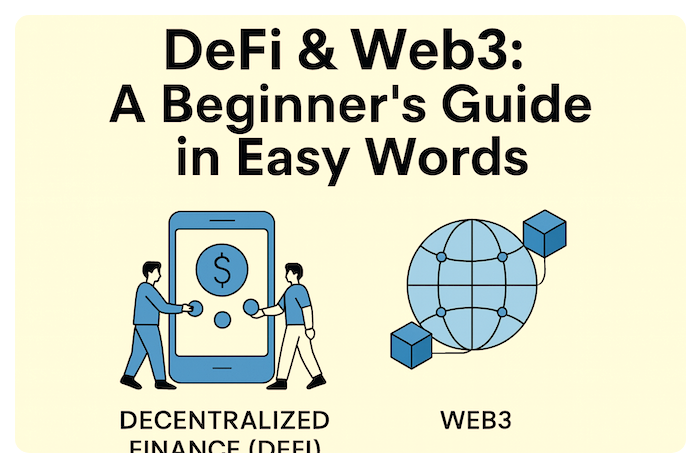
💡 What Is Decentralized Finance (DeFi)?
Decentralized Finance, commonly called DeFi, refers to financial systems built on blockchain technology that let people send, receive, borrow, or lend money directly — without traditional middlemen like banks or brokers. In DeFi, transactions happen peer-to-peer and are governed by programmed contracts (smart contracts) instead of central authorities. Investopedia+1
✅ Key Points (Simple):
- DeFi lets you control your own money directly. OVHcloud
- Transactions are handled automatically by code on a blockchain. Investopedia
- No central bank or financial institution is in the middle. Investopedia
What Is Web3?
Web3 is an idea for the next generation of the internet where control is decentralized — meaning you own your data, identity, and digital assets rather than big tech companies. It uses blockchain technology so apps run on networks of computers, not a single company. Amazon Web Services, Inc.+1
🧠Core Ideas (Simple):
- Web3 is a decentralized internet that lets users interact directly with each other. Amazon Web Services, Inc.
- It uses blockchain to secure and record actions without a central boss. Wikipedia
- DeFi is one of the most important financial pieces of Web3. Endless Domains
⭐ Why These Matter
Together, DeFi and Web3 aim to give more control, privacy, and freedom to users instead of centralized companies or institutions. They are building blocks of a future internet designed to be trustless (no single authority), peer-to-peer, and transparent. Amazon Web Services, Inc.
⚠️ Disclaimer
This article is intended for educational and informational purposes only. It does not constitute financial, investment, or legal advice. Always do your own research or consult a qualified professional before making financial decisions.